
Case Study: DCDC Kidney Care Standardised Training Across 240+ Dialysis Centres with SurgyLearn
How DCDC turned a distributed clinical training problem into an auditable, mobile-first workflow across 240+ centres.

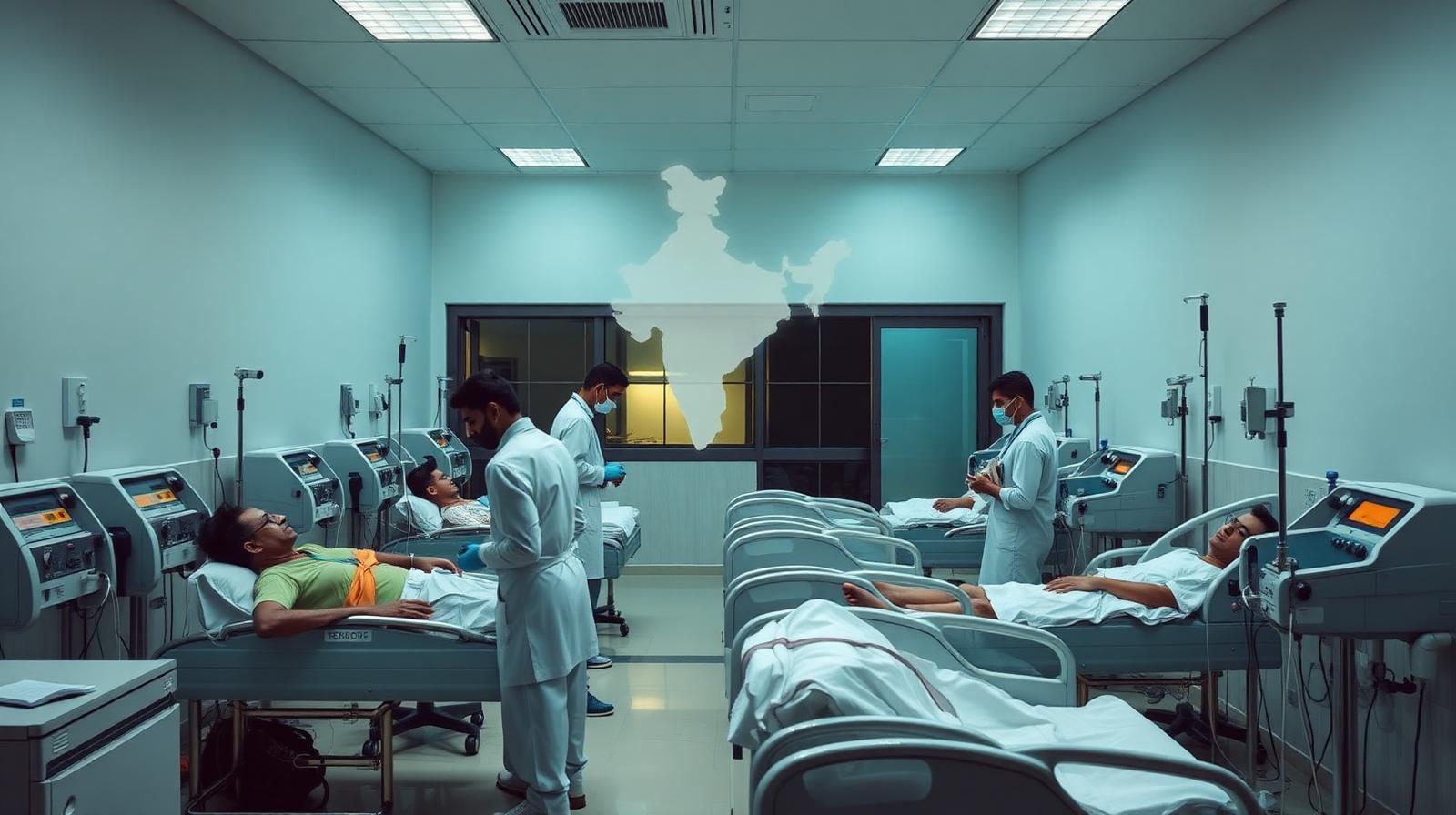
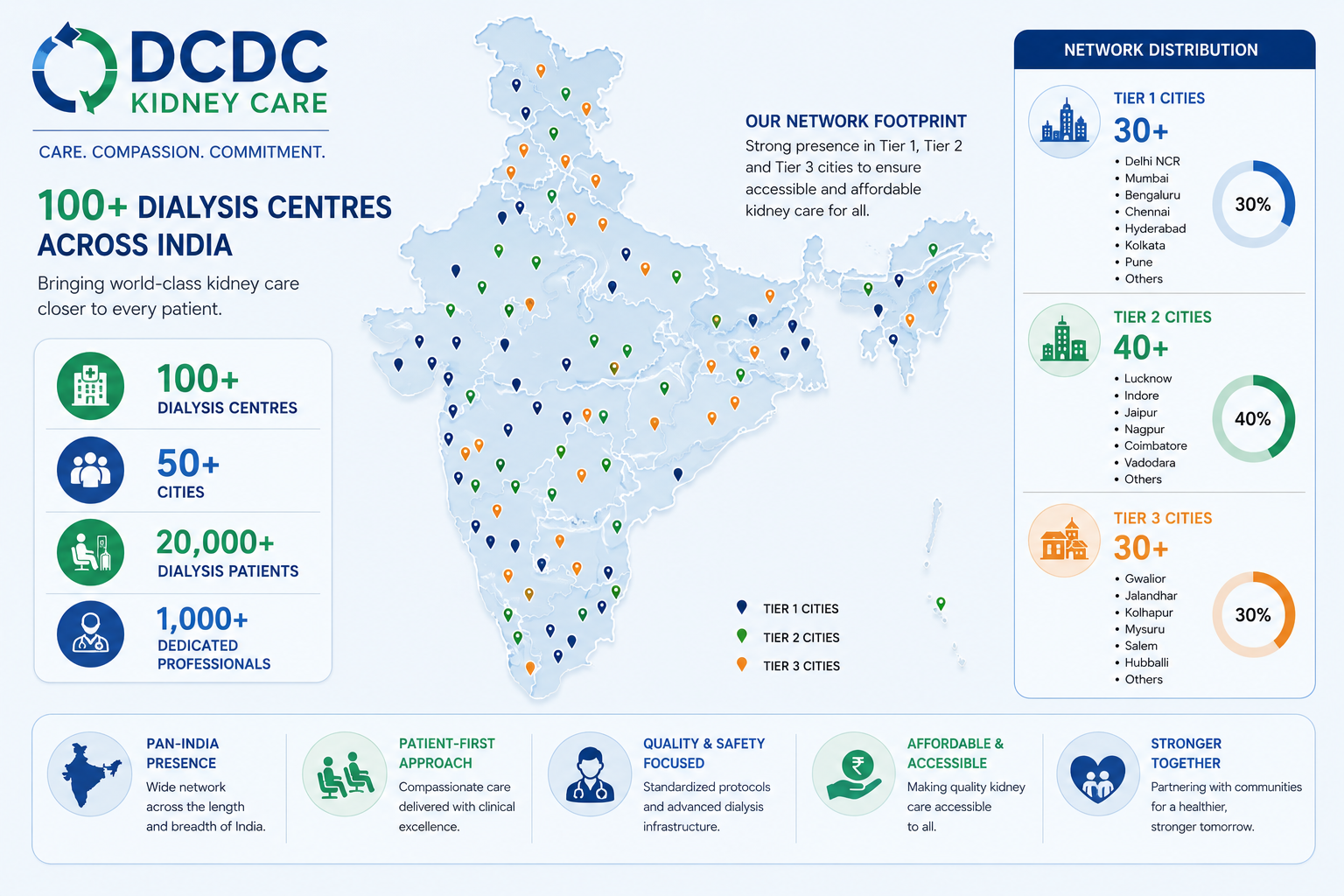
Running 242 dialysis centres in India is not a logistics problem — it is a clinical quality problem. Every one of those centres must deliver the same standard of care to every patient, every session, every shift. That standard lives or dies on the competency of the people operating the machines, managing the patients, and responding to complications at 2am in a Tier 3 city 1,200 kilometres from headquarters.
DCDC Kidney Care understood this from early in its growth journey. As the network scaled from a handful of centres in Delhi to 240+ facilities spanning the length and breadth of India, one question kept surfacing in clinical reviews: how do you guarantee that the training delivered in your Bengaluru centre is the same as what happens in Patna or Jaipur — and how do you prove it?
The answer, deployed in partnership with Surgyy's SurgyLearn platform, is the subject of this case study.
About DCDC Kidney Care
DCDC Kidney Care — Deep Chand Dialysis Centre — was founded in 2009 by brothers Aseem Garg and Akshat Garg in New Delhi. Named after their grandfather, Lt Deep Chand Garg, DCDC set out to prove that high-quality, affordable dialysis could be delivered at scale as a sustainable business — not just a charitable endeavour.
The company has raised over $61.4 million from investors including the Asian Development Bank, Impact Fund Denmark (IFU), and ABC Impact (backed by Temasek Trust). With its Series C round closed in March 2025, DCDC is in the most aggressive phase of its expansion yet — adding new centres, new services, and new workforce development infrastructure.
In April 2026, DCDC also launched the DCDC Academy of Healthcare — a formally structured Diploma in Dialysis programme affiliated with the Indian Medical Association (IMA) and the Association of Healthcare Providers India (AHPI). The Academy trains new entrants into the profession; SurgyLearn ensures that every existing DCDC employee — across all 240+ centres — is continuously trained, assessed, and documented to a consistent clinical standard.
"To cater to the increasing need for dialysis and renal services, it is essential to build a strong pool of skilled healthcare professionals." — Aseem Garg, Founder & CEO, DCDC Kidney Care
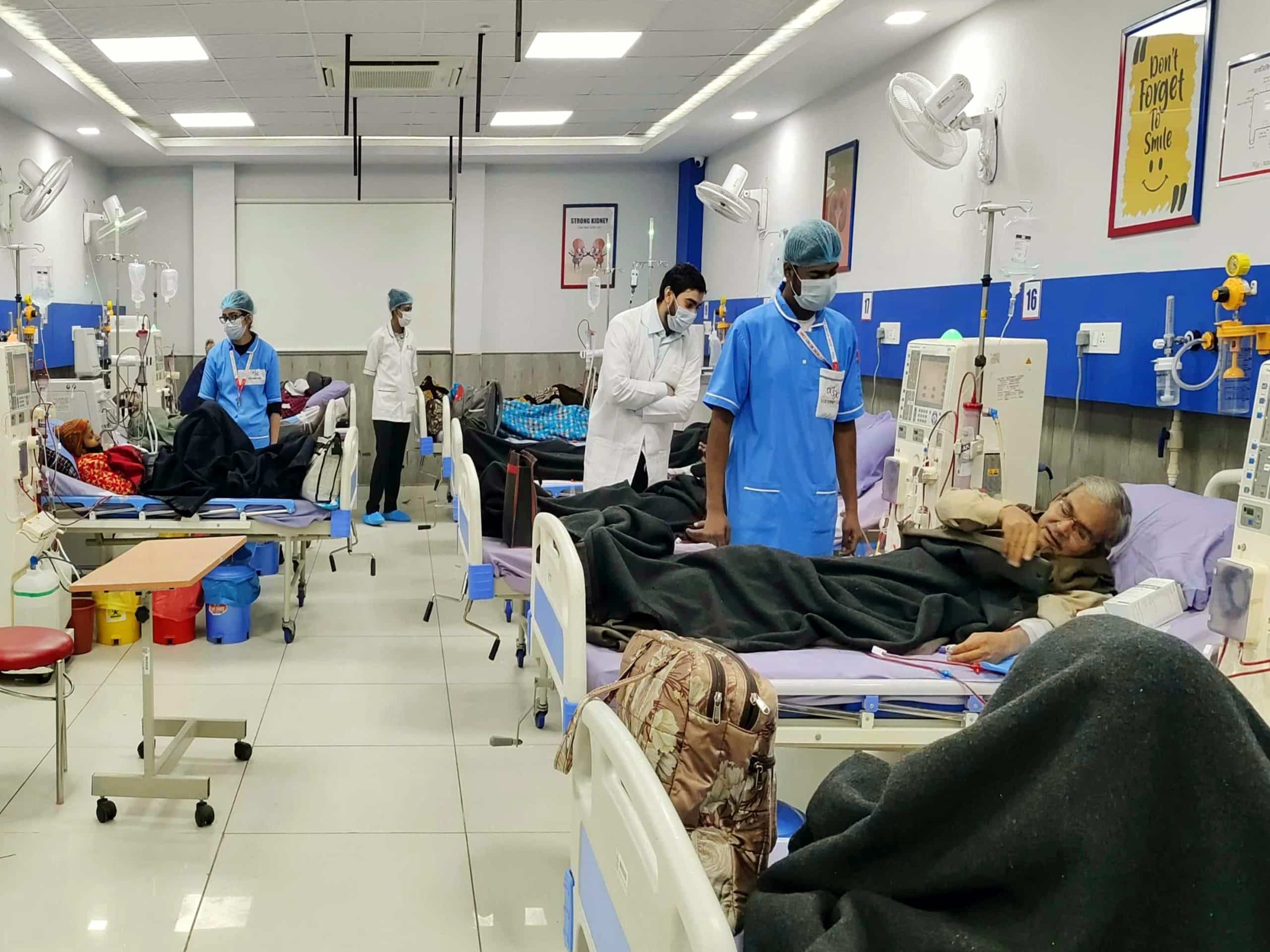
The Challenge: Training at Scale Across a Distributed Clinical Network
As DCDC expanded, its training challenge evolved from a problem of content (what to teach) to a problem of infrastructure (how to reliably deliver, track, and verify training across a geographically distributed workforce operating 24/7).
The Specific Pain Points
Geographic dispersion: 240+ centres spread across metro cities, Tier 2 and Tier 3 locations meant centralised classroom training was logistically impossible and prohibitively expensive. Flying staff to Delhi for every protocol update was not viable.
Shift-based workforce: Dialysis centres operate across multiple shifts. Traditional training events exclude staff on alternate shifts, creating uneven competency within the same centre. A technician on a night shift had no reliable way to access the same training as a colleague on days.
Documentation gaps: For both internal quality audits and accreditation assessments, DCDC needed to demonstrate — with evidence — that specific training had been completed by specific staff. Paper sign-in sheets and Excel trackers created audit trails that were incomplete, inconsistent, and nearly impossible to consolidate across 240 locations.
Inconsistent quality: Without a standardised digital training system, the quality and depth of training varied by centre, by senior technician, and by how recently the printed manual had been updated. This created patient safety and brand reputation risk.
Protocol updates: Dialysis practice evolves — new machines, updated infection control protocols, revised reuse guidelines. Disseminating updates reliably to 1,000+ staff across 240+ centres, and confirming they had been read and understood, was an ongoing operational challenge.
The Solution: SurgyLearn for Distributed Staff Training
DCDC deployed SurgyLearn as the centralised digital platform for staff training across its entire network. The deployment addressed each pain point with specific platform capabilities:
1. AI-Powered Content Generation
DCDC's clinical and operations teams had deep institutional knowledge — accumulated over 15 years in SOPs, clinical protocols, training videos, and expert-led sessions. The challenge was converting this knowledge into structured, assignable digital courses without requiring a dedicated instructional design team.
SurgyLearn's AI content generation capability allowed DCDC's subject matter experts to input source materials — written protocols, clinical guidelines, video recordings of expert demonstrations — and automatically generate structured course modules complete with assessments. A protocol update that previously required a physical training event could now be converted into a digital module and pushed to all 240+ centres within hours.
2. In-Video Quiz Pop-ups
DCDC's Train-the-Trainer (TTT) programme — led by CEO Aseem Garg and Clinical Head Dr. Deepak Agarwal — had already produced a library of multilingual training videos. The risk with video-based training is passive consumption: a technician marking a video 'watched' without genuinely engaging with the content.
SurgyLearn embeds quiz pop-ups at strategic moments during video playback, requiring learners to answer correctly before proceeding. This transforms every video into an active assessment event — not just a viewing record. Completion data now reflects genuine engagement, not just play-time.
3. Camera and Microphone Proctoring
For high-stakes competency assessments — annual clinical re-certifications, new equipment authorisations, infection control qualifications — DCDC needed to ensure that the right person completed the right assessment. SurgyLearn's proctoring capability, using the learner's device camera and microphone, provides identity verification and assessment integrity without requiring staff to travel to a central examination venue.
4. HR System Integration
When a new technician joins a DCDC centre, their onboarding curriculum is assigned automatically, without requiring manual enrolment by a centre manager. SurgyLearn's integration with DCDC's HR systems closes this loop: new joiners are auto-enrolled in their mandatory learning path from day one, and training records stay linked to employee profiles for the life of their employment.
5. Mobile-First, Learning on the Go
Dialysis technicians do not work at desks. They work at bedsides, at machine stations, in water treatment rooms. A desktop-only LMS is functionally inaccessible to the majority of the target audience. SurgyLearn's mobile-first architecture means a technician can complete a 10-minute microlearning module between patient sessions, on their own phone, in whatever language they are most comfortable with.
A single protocol update — previously requiring a physical cascade training event across 240 centres — can now be deployed as a digital module, assigned to all relevant staff, and tracked to 100% completion, all from a central dashboard.
What This Looks Like in Practice
Scenario 1: New Joiner Onboarding
A new dialysis technician joins DCDC's centre in Nagpur. On their first day, SurgyLearn — integrated with DCDC's HR system — automatically enrols them in the mandatory onboarding curriculum: 8 modules covering machine operation basics, infection control, patient assessment, emergency response, documentation standards, and patient rights. The technician completes modules on their phone across their first week. Their centre manager sees real-time progress on the dashboard. By the end of week one, the new joiner has a documented, verified training record — before they handle a patient independently.
Scenario 2: Protocol Update Rollout
DCDC's clinical team revises the reuse protocol for dialyser membranes in response to updated quality guidelines. The updated protocol is uploaded to SurgyLearn, converted into a 12-minute module with embedded quiz questions, and assigned to all dialysis technicians across 240+ centres. Completion is tracked in real time. Centres falling below 80% completion receive automated escalation alerts. Within 72 hours, the update has been confirmed as understood by staff across the entire network — with a timestamped, auditable record.
Scenario 3: Annual Clinical Re-certification
DCDC conducts annual competency re-certification for its senior technicians. Previously, this required scheduling assessment events at each centre — logistically complex and consistently delayed. With SurgyLearn's proctored assessment capability, re-certifications are completed digitally, on each technician's own device, with camera-based identity verification. Results feed directly into HR records. The process that previously took 3 months of scheduling across 240 centres now runs as a continuous, self-service workflow.
The Broader Context: SurgyLearn and the DCDC Academy
In April 2026, DCDC launched the DCDC Academy of Healthcare — a Diploma in Dialysis programme affiliated with the IMA and AHPI, targeting 40 students per cohort annually and open to 12th-pass students from all streams as well as practising staff nurses. The Academy is a landmark initiative for India's renal care workforce pipeline.
The Academy focuses on training new entrants — creating qualified dialysis technicians from the ground up through a structured academic curriculum with practical clinical exposure across DCDC's centres. SurgyLearn, in contrast, serves DCDC's existing workforce — the 1,000+ technicians, nurses, and clinical staff already operating across 240+ centres. The Academy builds the pipeline; SurgyLearn ensures that everyone already in the network is continuously trained, current, and credentialed to a consistent standard.
Impact and Outcomes
Training standardisation: For the first time, DCDC has a single, consistent training curriculum delivered identically across all 240+ centres — regardless of geography, centre size, or staff tenure.
Audit readiness: Training records are now digital, centralised, and exportable — directly addressing the documentation gaps that previously created risk in quality audits and accreditation assessments.
Protocol velocity: The time from clinical protocol update to verified staff understanding has been compressed from weeks (in a manual cascade training model) to 72 hours.
Onboarding consistency: New joiners at every DCDC centre receive the same structured onboarding curriculum from day one.
Mobile reach: Shift-based and remotely located staff who were previously excluded from in-person training events now have equal access to all training content.
Lessons for Multi-Site Healthcare Operators
The DCDC × SurgyLearn deployment offers a replicable model for any healthcare organisation managing training across multiple locations:
- The documentation problem is the training problem. In accreditation and audit contexts, undocumented training is the same as no training. An LMS that generates audit-ready records is not an administrative tool — it is a clinical quality tool.
- Mobile-first is non-negotiable for shift-based workforces. Any training system that requires desktop access will fail to reach the majority of frontline clinical staff. Mobile-first design is the baseline, not a premium feature.
- Active assessment beats passive completion. In-video quizzes and proctored assessments transform training from a compliance checkbox into a genuine competency event.
- Integration with HR systems creates a self-maintaining training ecosystem. Automating enrolment based on role, location, and tenure eliminates administrative overhead and ensures no one slips through the cracks.
- Protocol update velocity is a patient safety metric. The faster a clinical update reaches the bedside, the safer the patient.
References
- DCDC Kidney Care: 240+ Centres, 10M+ Sessions — dcdc.co.in
- DCDC Academy of Healthcare — dcdc.co.in
- DCDC Kidney Care launches Academy — BioSpectrum India, April 2026
- DCDC Kidney Care launches Academy — Indian Pharma Post, April 2026
- DCDC Kidney Care: Following the Bloodline — London Business School
- Surgyy SurgyLearn — Healthcare Staff Training Platform — surgyy.com
Written by
Mohammed Jamil Nasir
Founder — Product & Tech, Surgyy Innovation Labs
12+ years in Product, Design & Tech · PGC AI/ML, IIT-Guwahati · Global MBA, SP Jain · BE-CSE
Mohammed Jamil Nasir leads product and technology at Surgyy Innovation Labs, building AI tools for India's hospitals and healthcare networks. He writes about healthcare AI, accreditation, and clinical operations.
Connect on LinkedInKeep reading
NABH 6th Edition: Your Complete 2026 Roadmap to Hospital Accreditation in India
Standards, digital mandates, costs, timelines and a 12-month plan to get your hospital NABH-accredited under the new 6th Edition.

Why Hospitals Need More Than a CRM: How SurgyCRM Closes the Gap Between Patient Acquisition and Lifetime Value
SurgyCRM is the only healthcare-native CRM that unifies patient acquisition, clinical journey management, feedback, and field sales into one AI-powered platform — purpose-built for hospitals in India and the GCC.